


What Lies Beneath Water, Land, and Mud: Edgar Rebaño’s Story
- Jonell Gregorio

- Jan 5
- 3 min read

By | Antonia Renz L. Baylon and Divine V. Pamolarco
After the widespread COVID-19 pandemic in 2020, Edgar’s life took a drastic
turn. Edgar Rebaño, 58, a resident of Lapnag, Banga, Aklan, was once a tricycle
driver whose daily routine depended on the open roads. But as the pandemic
started, those roads became uncertain and unsafe, pushing him toward a new
path, one grounded not in transport, but in water and land.
A father of three and a husband to a wife who works as a teacher, Edgar
became increasingly cautious about going outside. The fear of exposure to the
virus and the possibility of bringing illness home to his family forced him to reconsider his work as a tricycle driver. Choosing safety over risk, he stayed close to home and focused on what he already had in his backyard

Way before the pandemic started, Edgar had already established a small fishpond in his backyard. During lockdowns and movement restrictions, this once a hobby became his main focus. With all the time he had at home, he carefully developed his farm and later presented a project proposal to the Aklan Training Institute (ATI). When ATI conducted an area validation to confirm accreditation, they found an aquaculture farm that reflected months of dedication and hard work. Interviews followed, marking a change of course for Edgar’s growing venture.

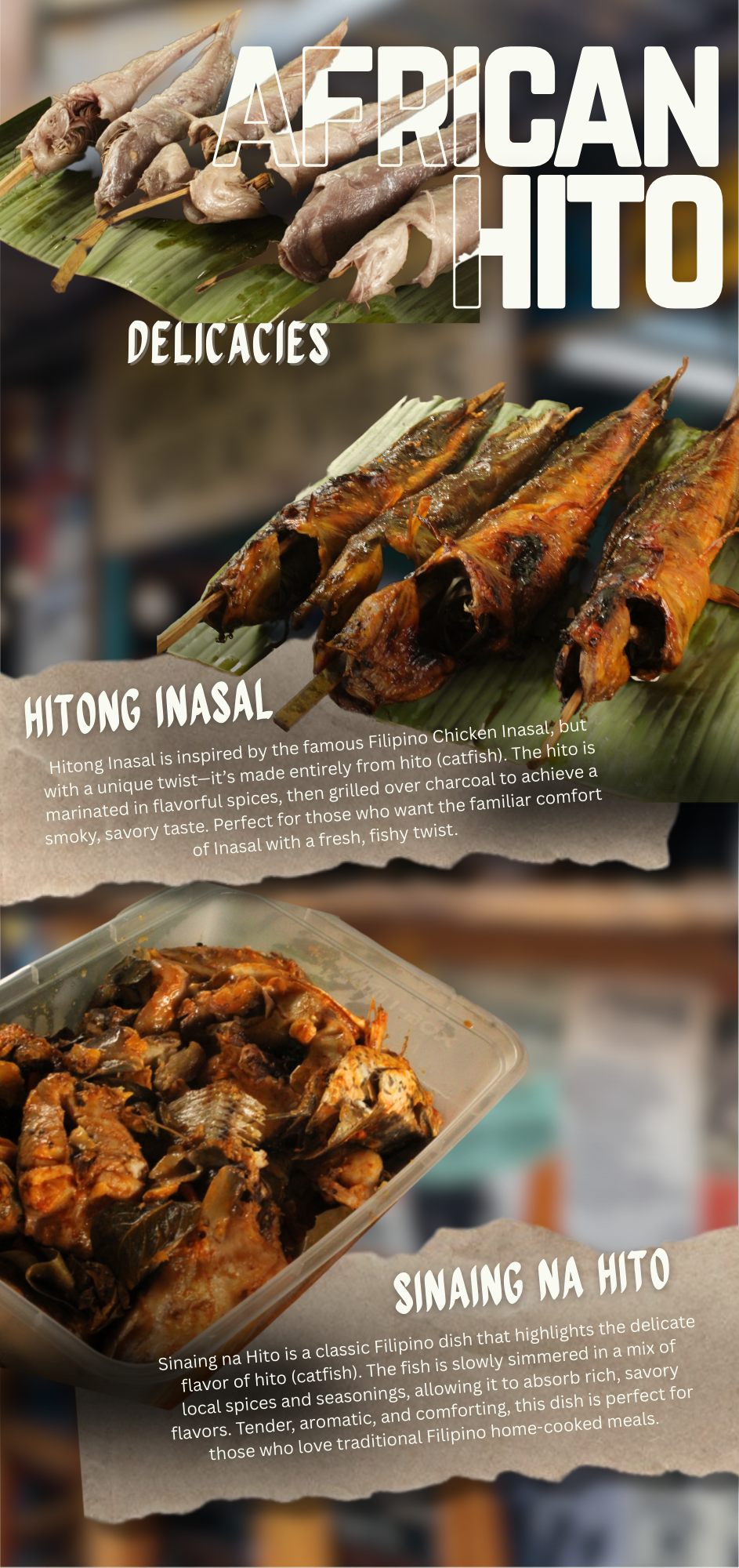
The aquaculture farm was well-maintained, showing a picture of balance in the area. On the higher portion of his land, Edgar planted trees, vegetables, and other crops. On the lower portion, he established hatcheries and fishponds where tilapia, hito (catfish), and crayfish thrived. This thoughtful use of land allowed him to be part of establishing an aquaculture farm through inland fisheries here in Aklan.
One of his greatest challenges was finding a supply of similya, or fingerlings, of African hito. Rather than relying on limited suppliers, Edgar chose to learn how to culture and breed the fish himself. After five months of training, he successfully mastered fish breeding, enabling him to expand his production and culture of different kinds of isdang tabang.
At first, some people teased him, believing that his aquaculture work was merely a hobby. Over time, Edgar proved that with the right process and proper procedures, aquaculture could be a sustainable source of income.

“May pera sa tubig, lupa, at putik,” he often says, “kung alam mo lang kung pa’no ‘to gamitin.”
During the pandemic, Edgar’s inland fishery became his main source of income. As a graduate of the Bachelor of Science in Fisheries, he applied his academic background to improve his farming practices. Years of experience later, his growing success sparked an interest in agri-crop farming, inspiring him to consider opening a course in inland fisheries to share his knowledge with others. With the help of ARSET (Applied Remote Sensing Training Program) and TESDA (Technical Education and Skills Development Authority), his dream will soon be a reality.
“Kung ok ang supply ng kuryente at yung weather conditions, maganda ang harvest.”
Edgar shared. The water he uses comes from a well, which he considers a blessing.
“Galing yan sa bukal lahat, biyaya ng Panginoon.”

What began during the most difficult time resulted in a turning point in Edgar Rebaño’s life. From a tricycle driver to an aquaculture farmer, his story shows how resilience, knowledge, and faith can transform uncertainty into opportunity, proving that sometimes, the greatest livelihoods are found in water, land, and mud.
Fresh from the Farm


Comments