


Lives on the Line, Time Running Out: Barangay Daja Sur and Jumarap's Plea for a Broken Wall
- Jonell Gregorio

- Dec 28, 2025
- 10 min read
Updated: Jan 7
BY ALYSSA CERA, NOELLYN LOPEZ, JHOLEIZA MANGILOG, & HAFEE ROMPE
When the flood water rise, what stands between a home and disaster? Often, it's a strong wall built along the riverbank. It's called Revetment Wall.
But this wall is more than just rocks and cement. It's a promise of safety. It stands for community's hope for a peaceful future, free from fear.
The Broken Wall
Along the river in Daja Sur, Banga, Aklan, stands a wall built to keep people safe from floods.
But now, this wall is broken.
The cracks in the stones are more than just damage. It's a sign of fading hope for the families who live nearby. Their broken flood control wall no longer offers protection.
LIVING ON THE EDGE: A Mother's Fear When the Rain Begins

"Biggest Fear gida nakon hay kung sue-o bun kami it baha ag kung kami eata ro iya hay paalin lata?" ("My biggest fear is that, what if the flood comes here and we're only by ourselves, what will we do?")
This thought haunts a mother of two, whose name we will keep as Aling Rosa for her privacy. For her, the rainy season is no longer about cool weather or fresh air; it is a time of trauma, sleepless nights, and a heavy question that hangs in the air with every dark cloud.
Aling Rosa's family lives in a vulnerable area. Every time the skies darken and the rain starts to fall, her mind races ahead of the storm. "Everytime nga maginuean hay akon tang naisip hay gabaha eon mata. S'yempre may trauma eota. Haron eon man makon gabaha, gakapag eotang rayon karon, 'di eotang kapaino-ino rayon karon kung ano akong ubrahon." ("Every time it rains, the thought that always comes to my mind is, "It will flood again." Of course there is already a trauma. There it is again, the flood. I will panic and can't think anymore of the things I need to do.")
The origin of this deep-seated fear is a specific, terrifying memory. Aling Rosa’s recounts the day she witnessed a landslide near her neighbor's home. Seeing the earth collapse and a home be swallowed changed her perspective with the rain permanently. “Nag umpisa akong fear hay tag nakit-an ko gida abi ro estaka ngara sa akong printe nga nahueog. Uean-uean eata ra, magdueom-dueom eata ron hay nahadlukan gida ako rayon.” ("My fear started when I saw this revetment wall in front of me collapsed and fall. It's just a rain, but even if it just gets dark, I'm already scared of it.") she shares.
For her, the sound of droplets is no longer just weather; it’s a warning siren. “Uwa ta kami it tueog-tueog run.” ("We're not sleeping anymore.") she added.
Her deepest wish is not for luxury, but for peace and a return to normalcy. “Akon gida nga napangamuyo ag wish gida run, hay kung pwede makaayad eota ag mabalik sa dati agud matawhay eota baea ing paino-ino.” ("What I'm praying for and asking is if it's possible to fix it and return to how it was before so that our minds can be at peace.")
Aling Rosa’s story is a powerful testament to the silent crisis faced by families in climate-vulnerable areas. Her resilience is not a choice but a necessity, forged in the relentless cycle of fear and recovery. It underscores an urgent need: for solutions that go beyond temporary relief and build lasting security, so that families like hers can replace the question “What if it’s our turn next?” with the assurance that “We are safe now.”
LOLO ENTE'S ANGER: A Broken Wall, A Broken System

On September 16, 2024, the floodwaters of Typhoon Bebinca did more than test this wall. It swept past the damaged structure and into the life of 83-year-old Vicente "Ente" Resota Ingalla. The river, turned into a monster, ignored the broken wall and took his home.
Lolo Ente does not mince his words. To him, the damaged revetment wall in Daja Sur is a clear symbol of failure. "Balewala lang, dahil ro sistema hay bulok ro supervision it highway," ("It's pointless anyway, because the highway supervision system is rotten.") he says.
His pain is deeply personal and financial. When Typhoon Bebinca came, Lolo Ente could only watch. The water was too strong. When his home was falling, he couldn't do anything, “Uwa ako it maubra,” ("There's nothing I can do.") he says. He lost his home, which cost about 500,000 pesos, and was gone. Just like that.
For Lolo Ente, the immediate aid provided after the disaster only highlights the absence of a real, lasting solution. He acknowledges that their municipality provides "mga damit, mga pang emergency," ("clothes, emergency supplies") and that the Municipal Mayor gave 5,000 pesos.
But for a man who has just lost his life's investment, he said that there is no substitute for the security that should have been provided by a well-built wall. "Uwa man it pangako," ("No promises were made") he states bluntly, feeling the government has made no real promise to protect them from the next storm.

The wall has been broken since 2023. The damage started small but got bigger every year. Now, it has even eaten half of the road next to it.

FLOOD WATERS REACHED THE SCHOOL
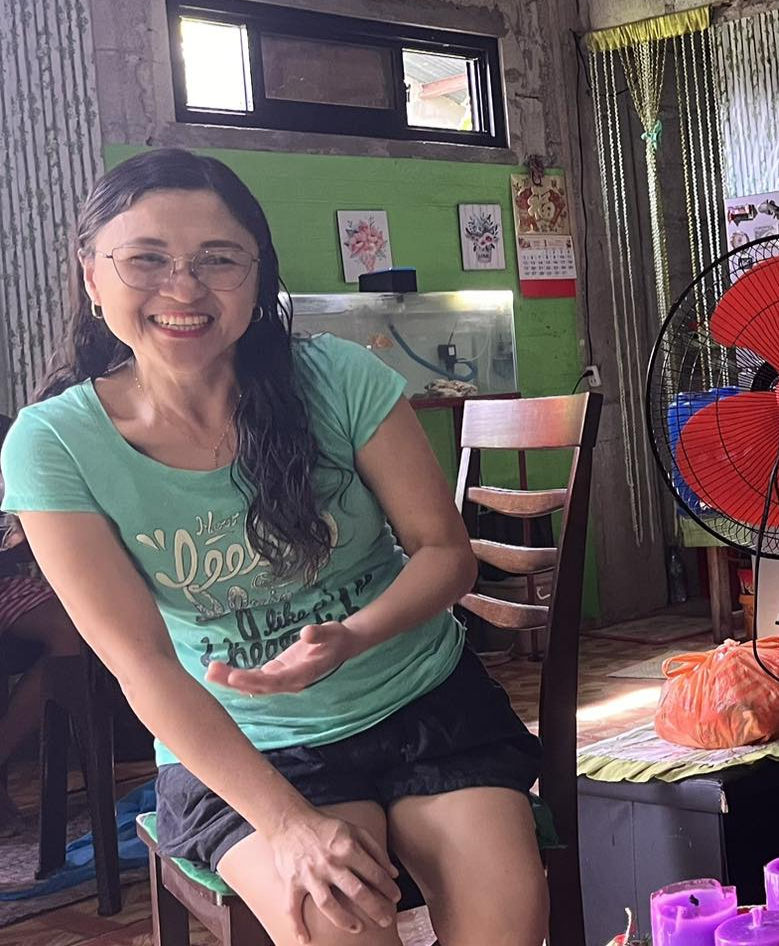
Ma'am Joy, a teacher from Daja Sur, fears for her school and students. Her main worry is the school building, which has stood since 1945 and could be destroyed "in an instant".
She describes the direct threat. The erosion has already consumed many houses along the river and now threatens the school. “As a teacher malaki talaga kinakatakot namin, First d'yan is syempre 'di natin alam 'yung building masisira tapos paano 'yung mga bata tapos s'yempre 'yung mga gamit namin, magsisimula na naman kami sa umpisa, so 'yun ang mahirap na part.” ("As a teacher, this is something we are really afraid of. First, of course, we don’t know if the building will be damaged, and then we worry about what will happen to the children. We also think about our belongings. If everything gets damaged, we would have to start all over again, and that is the hardest part.")
Recently, another typhoon flooded the area, and the Daja Sur Elementary School was affected.
Her appeal to the government is urgent. She hopes public attention will push for an immediate solution to the wall before the situation worsens. “Ang wish ko sana masulosyonan na as early, sana mapansin na nila yun kasi ‘di lang para sa amin, para sa kinabukasan ng mga bata, kasi sayang magbi-build pa sila ng another building kung pwede lang naman 'yung revetment wall, 'yun muna ang unang mabigyan ng pansin para less 'yung budget nila, para lang muna sa revetment wall. Kasi dodoble ang kanilang poproblemahin, saan 'yung mga bata? saan kami ilalagay? Magsisimula talaga kami sa umpisa. Kasi malapit na talaga sa building 'yung tubig.” ("My wish for this problem to be solved as soon as possible. I hope they will notice it because this is not just for us, but for the future of the children. It would be a waste to build another building when a revetment wall could be done instead. That should be the priority; it's more cost-effective solution. Otherwise, their problems will double. Where will the children go, and where will we be placed? We will really have to start from the beginning again. The water is already very close to the building.") she said.
“ANO PO BANG MAGAGAWA NAMIN?” ("WHAT CAN WE DO?"): The Barangay's Struggle

Kagawad Boy explained the barangay's efforts. He clarified the steps the local government has taken. "Actually last year, kompleto na lahat sa resolution," ("Actually, last year, everything was already complete in the resolution") Kagawad Boy stated, explaining that all necessary paperwork for a 250-million-peso project was finalized and submitted for implementation.
However, the process hit a major national roadblock. "Nagkaroon ng issue sa flood control, hinold lahat," ("There was an issue with the flood control project, so everything was put on hold.”) he said, linking the delay to a directive from the national Department of Public Works and Highways (DPWH) that froze flood control projects following a Presidential address. This has left the project in a state of investigation and delay.

He said that the Barangay Council is directly facing the community's anger.
"Kami talagang mga taga-barangay ang laging sinasabon ng mga tao, ano raw aksyon namin?" (“We, the barangay officials, are the ones who always get blamed by the people, asking what actions we have taken.”) Kagawad Boy recounted.
His response highlights the core issue: "E, ano magagawa namin sa laki ng budget na kailangan d’yan? Buti sana kung 10,000 lang 'yan, okay, eh hundreds of millions 'yan." (“But what can we really do when the budget needed is that huge? If it were just 10,000, that would be fine but this requires hundreds of millions.”)
Kagawad Boy confirmed that there is no fixed date for the release of the massive budget required. "Nag follow-up na pero wala talagang pinangakong fixed," (“We already followed it up, but there was still no promised fixed.”) he admitted, though he hopes work could potentially begin by 2026, with Daja Sur stated as a priority area.
His final thoughts echoed a concern for the people: "Sana nga kasi kawawa talaga 'yung barangay tsaka eskwelahan d'yan... daming maaapektuhan." (“I truly hope so because the barangay and the school there will truly suffer. Many will be affected.”)
THE SAME PROBLEM NEXT DOOR: Barangay Jumarap

The problem of a damaged revetment wall is not unique to Daja Sur. In neighboring Barangay Jumarap, Banga, Aklan, a community lives with the same fear, where their protective wall also failed.

Kagawad Rolando explains their situation. "Ro ginakatakutan namon run hay ro ma-erode do

amon nga baeay," ("What we fear is that our house will be eroded") he says, sharing the universal fear of families along the Aklan River: watching the water eat away at the very ground beneath their homes.
Like in Daja Sur, residents have received promises but no concrete action. Kagawad Reyes confirms that the DPWH has committed to rehabilitating their wall and even requested heavy equipment for river rechanneling. "Gasalig kami run nga andang maayos it madali," ("We believe that they will fix it soon") he notes.
However, the critical question yields a familiar answer: "Uwa, uwa man it exact date." ("None. There's no exact date.") The reason given echoes a systemic issue—agencies face budget constraints, especially at year-end.

Punong Barangay Teodorico Teodosio Jr., 60, explained what he did after the wall in Barangay Jumarap broke. "Akon nga ginubra nag-report eagi ako sa atun nga district engineer," ("What I did right away was report it to our district engineer,") Kapitan Teodosio stated, explaining he forwarded pictures to the Aklan District Engineer's office. He then discovered that a formal request letter for assistance had already been sent to the regional office.
Last week, he received a response. "Nakabaton eon ako it sabat it region nga gapadaea sanda iya it amphibious backhoe," ("I received a response from the region that they will send an amphibious backhoe here.") he confirmed. The commitment from the region is to provide specialized equipment for river rechanneling work.
He indicated the process is underway but not immediate. The regional office's response letter was received about two weeks ago, and a regional engineer will survey the site before deploying the equipment. A project engineer in Kalibo had estimated the equipment would arrive last week, but it has not yet been received. "Asta gani makarun hay uwa pa nag-abot," ("Until now, it still hasn't arrived,") Kapitan Teodosio noted, confirming the equipment is still pending.
The Mayor's Perspective: "It's Not Our Coverage"

Mayor Redison has seen the damage firsthand. According to him, he has visited Barangay Jumarap twice, and Daja Sur four or five times. His assessment is stark: "It’s out of control," he says. "Kahit gaano katibay masisira at masisira talaga." ("No matter how strong it is, it will still break and be destroyed.")
The Mayor clarifies a key point of responsibility. He explains that the repair of the revetment wall is beyond his office's authority:
"It’s not our coverage na mag-ayos ng revetment wall, it’s shouldered by the DPWH." ("It's not our coverage to fix the revetment wall; it is shouldered by the DPWH.")
But he clarifies that he is doing his best and confirms he has already sent a formal letter to the national agency to inform them of the destruction.
While he notes the original construction included proper materials like steel reinforcements, he attributes the failure to natural force. "Malakas 'yung current because it came from the mountain," ("The current is strong because it came from the mountain,") he states.
He reveals that the DPWH had promised to deploy sand and gravel for temporary measures. "Pumunta ako noong isang araw, no, wala pa rin hanggang ngayon," (" I went there the other day and there's still nothing, until now,") he shares. His hope now is for the DPWH to make an emergency move to lessen the damage and reroute the river’s flow. "I hope they will do another emergency move," Mayor Redison concludes, placing the immediate next steps in the hands of the national department.

The plea for answers sits in silence. Weeks have passed since we sent a letter to the Department of Public Works and Highways Region VI District Engineer, requesting an interview about the failing flood controls in Daja Sur and Jumarap. No formal reply has come.
But the workers at the DPWH office said they are not allowed to give any information as it's from the National Government's order.
The story of the broken revetment walls in Banga is not one story, but a lot. It is told through the voices of those who live with the danger every day. From the soaked classrooms of Daja Sur Elementary to the vanished home of Lolo Ente, the evidence is clear.
Local leaders have filed reports, passed resolutions, and sent letters. The Mayor has formally passed the request to the national DPWH. Yet, the wall remains broken, and the next rainy season draws closer.
The plea from residents, teachers, and officials all lead to the same, pending question for national agencies: What will it take to turn these pleas into a repaired wall?


Comments